

Why Most KPIs Are Useless
Most companies don't have a KPI problem; they have a metric problem. They're tracking numbers that are easy to measure instead of numbers that are useful to act on. The difference determines whether your reporting actually changes behavior or just fills a slide.

Executive Dashboard Examples Every Leadership Team Should Have
The companies that get real value from executive dashboards are the ones with a single, governed data model underneath — so the CEO's revenue number, the CFO's margin number, and the sales VP's bookings number are always the same number, just viewed through a different lens.

The Hidden Cost of Manual Data Entry Between Business Systems
Integration projects typically pay for themselves within 6 to 12 months once you account for labor hours reclaimed, error reduction, and the compounding value of faster, more trustworthy reporting. The real return isn't just time saved — it's decisions made with confidence instead of a caveat.

NetSuite Is Not Your Data Warehouse
NetSuite is an excellent ERP. It was never designed to be a data warehouse, and the gap between what it does well and what growing companies need from analytics is where most reporting headaches live.
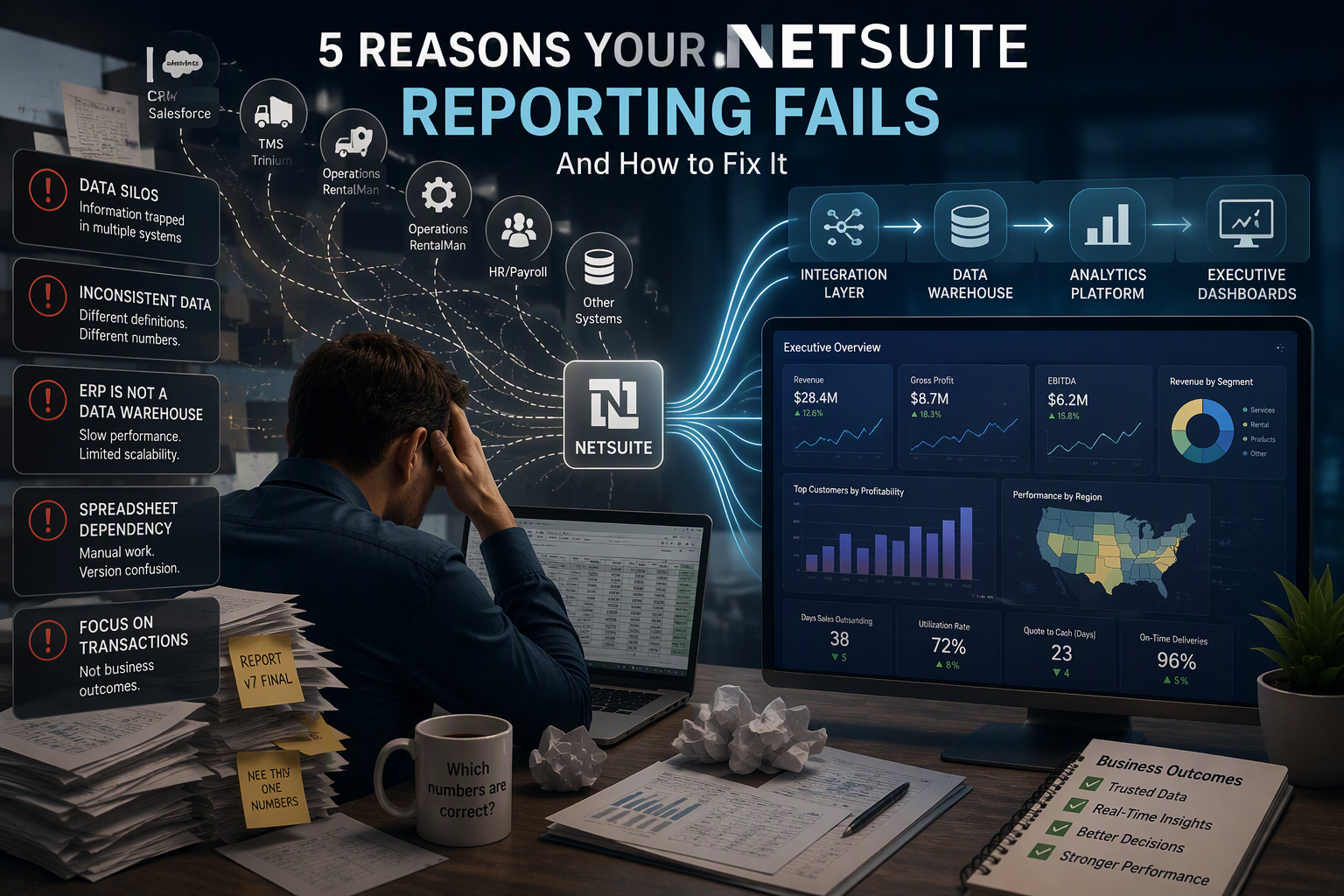
5 Reasons Your NetSuite Reporting Fails
Many organizations invest heavily in NetSuite expecting instant visibility into their business. The ERP implementation is completed, transactions are flowing, and leadership assumes meaningful reporting will follow.
Then reality sets in.

Navigating the Data Governance Landscape: Best Practices for a Consolidated Data Platform
As the volume, velocity, and variety of data grow exponentially, managing this critical asset becomes increasingly complex.

Avoid These Data Integration Pitfalls
When implementing data integration, it’s important to be aware of common challenges that can arise. Set up a more effective and efficient data integration process by consideing the following items.

The 10 Steps to Implementing Data Integrations
Implementing data integrations in your company involves several key steps to ensure a smooth and effective process. Here’s a structured approach to get you started.

Data-Driven Strategies for Mid-Size Industrial
In the rapidly evolving business landscape, mid-size industrial companies are increasingly recognizing the transformative power of a data-driven approach.

The 7 Roles of Data in Decision Making
Data integration plays a crucial role in decision-making by providing a unified view of information, which is essential for informed and strategic business decisions.

Leveling the Cloud Playing Field
Cutting-edge cloud data technologies are no longer a luxury for the fortune 500. Today, mid-sized businesses are harnessing the power to transform their operations and compete on a global scale.

Consolidate – Illuminate – Elevate: Modern Data Enablement
Placing the data pyramid capstone.